
Precision in Vestibular Assessment

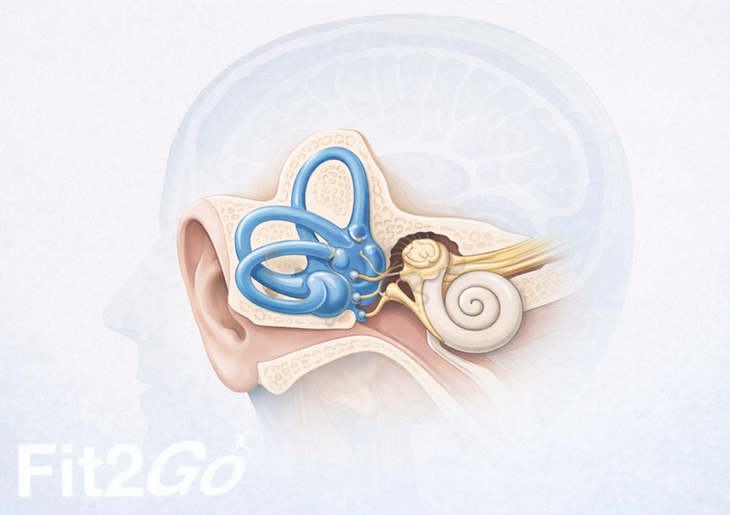
Dizziness is one of the most disruptive symptoms a person can experience. It affects balance, vision, concentration, confidence, and often independence itself. Yet it is also one of the most frequently misunderstood complaints in musculoskeletal and neurological care - too often managed with generic advice or incomplete testing.
At Fit2Go, vestibular assessment is approached differently. It is treated as a clinical investigation rather than a symptom to be managed. The objective is not simply to confirm that dizziness is “vestibular,” but to identify the precise mechanism responsible and determine what must change for recovery to occur.
Vestibular dysfunction can arise from the inner ear, the brain, the cervical spine, or from failures of sensory integration between these systems. Conditions such as benign paroxysmal positional vertigo (BPPV), vestibular neuritis, persistent postural-perceptual dizziness (PPPD), and cervicogenic dizziness may present with similar symptoms, yet require fundamentally different management strategies. Treating the wrong mechanism does not merely delay recovery - it can reinforce symptoms.
Assessments therefore extend beyond symptom description. Positional testing, eye-movement analysis, head-movement provocation, and balance assessment are used to interrogate vestibular pathways and determine whether symptoms are peripheral, central, cervicogenic, or mixed. Precision at this stage is essential; it defines the effectiveness of everything that follows.
Brodie Howatson: Experience Where It Matters
🧠 Specialist vestibular assessment in Nottingham for complex and persistent dizziness.

Vestibular assessment at Fit2Go is led by Brodie Howatson, Co-Founder and Consultant Physiotherapist, widely recognised nationally for his expertise in the assessment and management of dizziness and balance disorders.
Brodie has assessed and treated hundreds of patients with vestibular conditions, achieving exceptional results across both acute and long-standing presentations. He regularly manages cases that have failed to resolve with standard care, including complex and persistent dizziness referred by private consultants across the region.
Brodie is recognised as one of the East Midlands’ leading clinicians in this area, distinguished by a rare combination of advanced vestibular expertise and comprehensive musculoskeletal and spinal assessment skills. This integrated approach allows conditions that have previously failed to resolve to be accurately identified and treated
This volume of experience matters. Vestibular disorders are pattern-driven, and accurate differentiation improves with repetition, variation, and complexity. Brodie receives complex vestibular referrals from private consultants across the region, including patients with persistent or recurrent dizziness, atypical symptom patterns, and combined cervical, vestibular, and spinal contributions. His assessments are grounded in neuro-otological principles, where the aim is not to apply generic protocols - but to establish a clear diagnostic explanation that patients can understand and trust. This diagnostic clarity allows rehabilitation to be directed at the specific mechanism responsible for symptoms, whether that involves canalith repositioning, structured vestibular rehabilitation for central adaptation, cervical intervention, or reassurance only once pathology has been confidently excluded.
For many patients, this is the first time their symptoms are explained coherently. Dizziness is rarely an invisible problem - it is more often an unidentified one.
🧭 Accurate diagnosis changes the trajectory of recovery. It replaces uncertainty with explanation and allows treatment to be specific rather than exploratory; preventing
symptoms from being repeatedly reinforced by inappropriate intervention.


rophim dạo này thấy bạn bè nhắc hoài nên mình cũng ghé thử cho biết. Mình không có thời gian ngồi lựa kỹ hay xem hết kho phim đâu, chủ yếu vào coi giao diện có dễ dùng không. Vừa mở lên thấy trang khá gọn, kiểu nhìn một cái là biết nên bấm chỗ nào để tìm phim mới, không bị rối mắt. Mấy khối poster xếp đều, kéo xuống lướt nhanh cực tiện, gặp phim hợp gu thì click luôn khỏi phải qua nhiều bước. Mình cũng để ý là mục phim HD Vietsub được đặt khá nổi, nên ai hay xem kiểu đó chắc tìm nhanh. Nói chung cảm giác dùng lần đầu khá “mượt”, nhất là…
Mình xem soi cầu chủ yếu để giải trí, kiểu đọc cho biết rồi so với linh cảm của bản thân thôi. Trúng thì vui một chút, còn sai cũng chẳng buồn mấy vì mình không coi đó là chuyện hơn thua. Gần đây thấy nhiều người nói về chọn dàn theo chu kỳ, nghe thì có lý nhưng mình vẫn nhắc mình tỉnh táo, vì số liệu cũ đâu phải lúc nào cũng lặp lại y chang. Có lần mình đọc vài bài phân tích trên soicauxsmb.pro, thấy họ giải thích khá dễ hiểu, nhất là đoạn nói vì sao nên loại bớt vài cặp. Dù vậy mình vẫn thích tự ghi lại và theo dõi lâu lâu xem…